

Athletic performance is about more than physical ability. Confidence, focus, emotional regulation, resilience, and the ability to respond to pressure can have a significant impact on how athletes perform—and how they experience their sport.
At Congruency Counseling, we help athletes strengthen the mental and emotional side of performance while supporting their overall well-being. Whether you're struggling with performance anxiety, recovering from an injury, experiencing a loss of confidence, or simply wanting to develop a stronger competitive mindset, counseling can help you perform with greater confidence and congruence—both in and outside of your sport.
Athletes perform at their best when their mental, emotional, physical, and personal well-being are working together.
Our approach considers the whole person rather than focusing solely on performance outcomes. Depending on each athlete's needs and goals, counseling may incorporate evidence-based strategies drawn from cognitive behavioral approaches, mindfulness, visualization, goal setting, emotional regulation, strengths-based counseling, and other mental performance techniques.
For clients who desire it, faith can also be incorporated into counseling as a source of identity, meaning, resilience, and purpose. Faith integration is always guided by the client's preferences and goals.
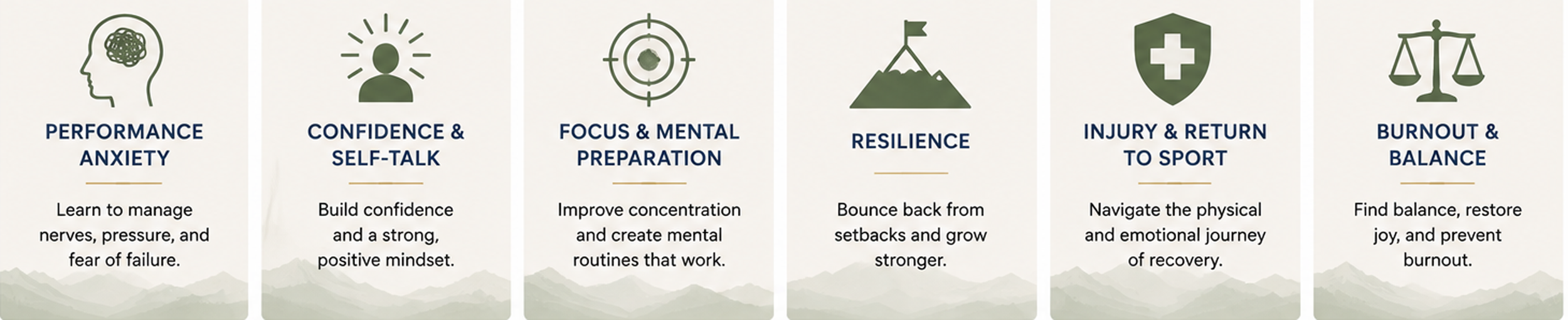
The Mental Side of the Game
You can train your body every day and still find that your mind gets in the way when it matters most.
Athletes may experience pressure to perform, fear of making mistakes, perfectionism, negative self-talk, difficulty recovering after a poor performance, or anxiety before competition. For young athletes especially, balancing athletics with school, relationships, family expectations, and identity development can become overwhelming.
Our approach helps athletes understand these challenges while developing practical skills they can use in competition, practice, and everyday life.

More Than an Athlete
For many athletes, sports become deeply connected to identity and self-worth. Success can feel incredible—but mistakes, injuries, reduced playing time, conflict with coaches, or the eventual transition away from a sport can leave athletes questioning who they are outside of competition.
We want athletes to succeed, but we also want them to develop an identity and sense of worth that extends beyond the scoreboard.
Counseling provides space to address both performance and the person behind the performance.
Meet Katherine
Former Professional Runner • Division I Athlete • Mental Performance & Counseling
Athlete. Therapist. Someone Who Understands the Mental Side of Sports.
As a former Division I cross country and track and field athlete at the University of Washington and a professional runner for more than a decade, Katherine understands firsthand that athletic success requires far more than physical preparation. Self-doubt, performance anxiety, injuries, setbacks, changing expectations, and the pressure to succeed can challenge even the most accomplished athletes.
Katherine's own experiences in competitive athletics taught her the importance of having the right support, practical tools, and willingness to adapt when things don't go as planned. Today, she brings that perspective into the therapy room, helping athletes develop the mental skills they need to compete with confidence, focus under pressure, navigate setbacks, and reconnect with their purpose and enjoyment of sport.
“The skills we develop to overcome obstacles in sport don't stay on the field or track—they become tools for life.”

Supporting the Whole Athlete
Katherine believes athletes are people first. Her work goes beyond improving performance to explore the thoughts, beliefs, relationships, expectations, and everyday realities that influence both athletic performance and emotional well-being.
Through curiosity and self-awareness, she helps athletes better understand themselves, develop self-compassion, identify what they need, and make meaningful changes both in and outside of their sport.
She integrates evidence-based approaches including Cognitive Behavioral Therapy (CBT), Dialectical Behavior Therapy (DBT), Acceptance and Commitment Therapy (ACT), and Internal Family Systems (IFS) to help athletes build practical skills while exploring the deeper beliefs and values influencing their experiences.
How Can We Help?
Katherine May Be a Good Fit If You're Struggling With:
Performance anxiety or competing under pressure
Self-doubt or loss of confidence
Perfectionism or fear of failure
Inconsistent performance
Motivation or loss of enjoyment in your sport
Injury, setbacks, or returning to competition
Balancing athletics with relationships, school, work, or family
Athletic identity and life transitions
Connecting your performance with your values and purpose
More Than Sports
While Katherine has a special passion for working with athletes, her experience extends well beyond sports. She works with clients of varying ages and concerns and is passionate about walking alongside people as they navigate challenges, transitions, and personal growth.
A Colorado native now living in Longmont with her husband and four boys, Katherine brings both professional training and meaningful life experience to her work. Her own journey through competitive athletics, career changes, parenting, divorce, remarriage, and building a blended family has strengthened her appreciation for resilience, growth, and the many different seasons of life.
Faith has also been an important source of strength throughout Katherine's journey. For clients who desire it, she is honored to incorporate Christian faith into the therapeutic process in a way that respects each client's goals, beliefs, and preferences.
Frequently Asked Questions
Still have questions? Take a look at the FAQ or reach out anytime. If you’re feeling ready, go ahead and apply.
-
No. Athletes may seek counseling because they are experiencing anxiety, depression, trauma, or another mental health concern, but others simply want support developing the psychological skills that contribute to performance and overall wellness.
-
Getting started is simple. Reach out through our contact form or schedule a call—we’ll walk you through the next steps and answer any questions along the way.
-
Not at all. We work with athletes across experience levels. Mental skills such as confidence, resilience, focus, and emotional regulation can benefit athletes whether they are beginning a sport or competing at a high level.
-
Absolutely. Particularly when working with younger athletes, parent involvement can be an important part of supporting healthy development while still providing the athlete with an appropriate level of privacy and independence.

Train More Than Your Body
You put time into developing your strength, skills, and technique. Your mental game deserves the same attention.
Whether you're trying to overcome performance anxiety, regain confidence, navigate a setback, or become a more resilient competitor, we're here to help you develop skills that extend far beyond your sport.